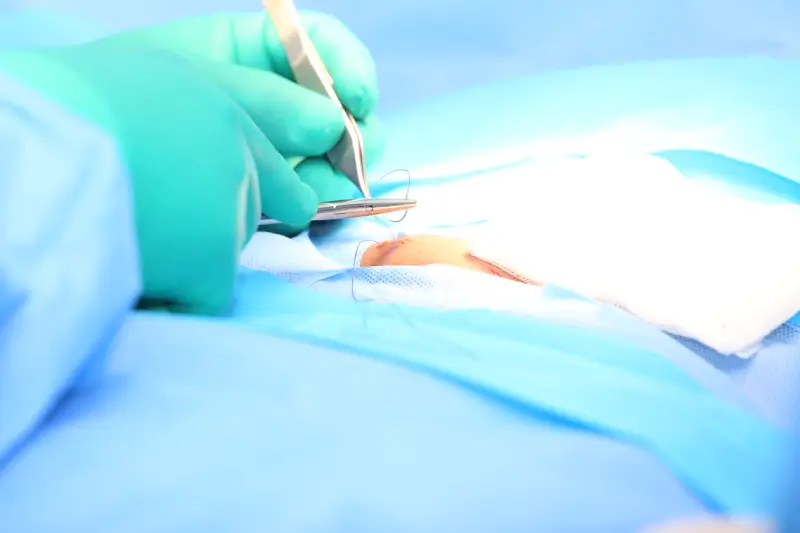


Most patients who have inguinal or umbilical hernia surgery return to desk-based work within 5 to 7 days and resume full physical activity within 1 to 2 weeks. Complete internal healing, including mesh integration into surrounding tissue, generally takes 4 to 6 weeks. Recovery speed depends on the type of hernia, the surgical technique used, and your overall health.
Why Generic Recovery Timelines Do Not Always Apply to You
Most recovery timelines you find online average results across many different situations: open surgery, laparoscopic surgery, robotic surgery, hospital admissions with overnight stays, and outpatient same-day procedures. Averaging all of that together can be misleading, because the surgical approach itself changes how fast a patient heals.
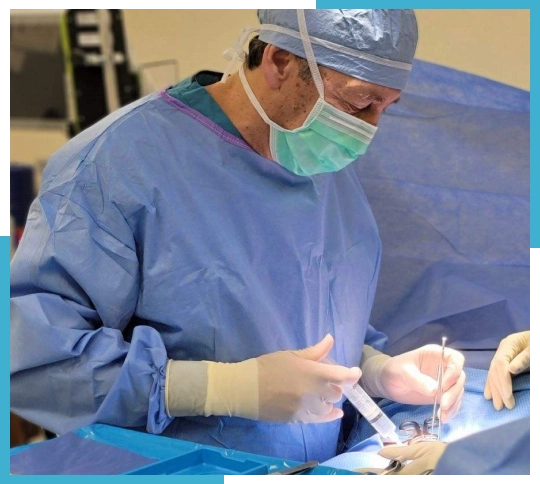
At Affordable Hernia Surgery Center in Rockville, Maryland, Dr. Alan Kravitz and Dr. Lawrence Starin have performed more than 20,000 hernia repairs combined over more than 30 years, using a same-day, mesh-based outpatient model that differs from the hospital-based experience described in most generic recovery guides. Real outcomes from that specific model, not a blended national average, are what should shape your expectations if you are considering surgery at a dedicated hernia center rather than a general hospital surgery department.
The center also draws patients from across the United States, not just the Washington, D.C., Maryland, and Virginia area, so this guide includes what that travel and same-day model means for planning your recovery, in addition to the standard week-by-week milestones.
What Factors Affect Hernia Surgery Recovery Time?
Hernia surgery recovery time is shaped mainly by the type of hernia repaired, whether the procedure used mesh, the anesthesia type, and your own age, weight, and activity level going into surgery. Five factors matter most.
1. Type of hernia repaired
Inguinal (groin) and umbilical (belly button) repairs typically heal faster than larger ventral or incisional hernias, which involve a bigger area of the abdominal wall.
2. Whether mesh was used
Mesh-based repairs, the technique used for every hernia surgery at Affordable Hernia Surgery Center, are associated with lower long-term recurrence rates than suture-only repairs. A 2025 study following inguinal hernia patients for 10 years after open mesh repair found 94.5 percent remained recurrence-free
(Source: National Library of Medicine (PMC))
3. Anesthesia type
Local or regional anesthesia, used for many procedures at this center, typically allows for a faster same-day discharge than general anesthesia, since there is less anesthetic to clear from your system before you can safely go home.
4. Your health going into surgery
Age, weight, smoking status, and pre-existing conditions such as diabetes all affect healing speed. The Centers for Disease Control and Prevention recommends quitting smoking at least 4 weeks before any elective surgery to reduce complication risk and support faster healing.
5. How physically demanding your job is
Patients with desk jobs generally return to work faster than those with physically demanding occupations that involve lifting, bending, or standing for long periods.
Hernia Surgery Recovery Time: Your Week-by-Week Timeline
Most patients move through four general phases: the first 3 days of rest and pain control, days 4 through 7 of steadily decreasing discomfort, weeks 2 through 4 of returning to normal activity, and weeks 5 through 6 of clearance for exercise and heavy lifting. Here is what that looks like in practice, drawn from the real recovery experiences of patients at Affordable Hernia Surgery Center.
Days 1 to 3: Right After Surgery
Most patients at this center arrive by 11 a.m. on a Monday or Wednesday, have surgery that same afternoon, and go home a few hours later with a companion. Local or regional anesthesia is used for most repairs, so recovering from the anesthesia itself is typically quick. Soreness and swelling around the incision, usually about 1.5 inches long, are common the night of surgery and the day after.
“On the night of the day of surgery, and the day after, I did suffer some pain, but as time passed the pain began to diminish.” — William Laurin, patient, inguinal hernia repair
“The surgery only took a couple hours and by the next day my wife was up walking around and the results were immediate.” — Glenn Simpson, patient’s spouse
Because the surgery center does not require an overnight hospital stay, patients within about a 6-hour drive can go home the same day with a companion, and patients who flew in can often fly home the same day as well, provided they have a companion and enough time between surgery and their departure.
Days 4 to 7: The First Week
By the end of the first week, pain typically begins to ease. Stitches are placed beneath the skin and dissolve on their own, so there is no separate visit needed just to have them removed.
“We drove down from Delaware and met Dr. Kravitz at 10:30 for a consultation, he explained everything and confirmed my condition, I was in surgery by 1:30 the same day, and my wife was driving me home by 3pm!” — Jason Walsh, patient, same-day consultation and surgery
Because the surgeons at this center do not place formal activity restrictions on patients after hernia repair, many return to light daily routines well inside the first week.
Week 2: Back to Most Daily Activities
Most patients return to desk-based or self-employed work within 5 to 7 days, though this varies by individual comfort and job demands. Many patients treated at this center are self-employed and do not get paid if they do not work, so readiness is judged by how a patient feels day to day rather than a fixed calendar date.
“Since Dr. Kravitz does not limit your activity I have been doing what I want every day and feel I am at 90 percent or better already.” — Jason Walsh, patient, 3 weeks post-surgery
Weeks 3 to 4: Steady, Noticeable Progress
By the third and fourth week, most patients notice a significant drop in soreness and a return to near-normal daily function.
“The recovery time is generally between 4 to 6 weeks before you’ll be feeling like yourself again, although by 2 weeks you will begin to be able to go about your life without a problem.” — William Laurin, patient, age 60, active in gym and mixed martial arts
Weeks 5 to 6: Full Clearance for Most Patients
Affordable Hernia Surgery Center reports that most patients return to full physical activity within 1 to 2 weeks and does not place blanket restrictions on returning to work or full activity after hernia repair, an approach that is less conservative than the 4- to 6-week restriction commonly recommended elsewhere. Across the broader hernia surgery population, most patients are cleared for unrestricted activity, including heavy lifting and strenuous exercise, by the 5- to 6-week mark.
Beyond 6 Weeks: Long-Term Healing
Internal healing continues even after external soreness resolves. William Laurin, six weeks after his procedure, reported being fully satisfied with his outcome and back to his usual gym and martial arts routine. Long term, watch for any new bulge at or near the incision site, which could indicate recurrence, and any pain that does not continue to improve over time.
Does Umbilical Hernia Recovery Take Longer Than Inguinal Hernia Recovery?
No, not by much. Umbilical and inguinal hernia recovery follow a similar overall timeline of 1 to 2 weeks for daily activity and 4 to 6 weeks for full clearance, though umbilical repairs can involve slightly more soreness in the first few days since the belly button area is engaged constantly during core movement, coughing, and getting out of bed.
The table below compares typical milestones across the three abdominal wall hernia types treated at this center. Ventral hernia recovery varies more than the other two because ventral hernias range widely in size and complexity.
| Recovery Milestone | Inguinal Hernia Repair | Umbilical Hernia Repair | Ventral Hernia Repair |
|---|---|---|---|
| Return home after surgery | Same day | Same day | Same day (most cases) |
| Return to desk work | 5 to 7 days | 5 to 7 days | 1 to 2 weeks |
| Return to light daily activity | 1 to 2 weeks | 1 to 2 weeks | 2 to 3 weeks |
| Full activity clearance | 4 to 6 weeks | 4 to 6 weeks | 6 weeks or longer, depending on hernia size |
| Typical incision length | About 1.5 inches | About 1.5 inches | Varies by hernia size |
Individual recovery always depends on your specific hernia, health, and your surgeon’s assessment. Use this table to set general expectations, then confirm your own timeline during your consultation.
Is Hiatal Hernia Surgery Recovery Different From Inguinal or Umbilical Recovery?
Yes. Hiatal hernia repair is a different type of surgery, performed on the upper digestive system rather than the abdominal wall, and it typically involves a longer initial recovery, including a liquid or soft-food diet for the first 1 to 2 weeks.
Affordable Hernia Surgery Center specializes in abdominal wall hernias, inguinal, umbilical, and ventral, and refers hiatal hernia cases to a gastrointestinal surgeon. If you are researching hiatal hernia recovery specifically, see the center’s dedicated guide: What Size Hiatal Hernia Needs Surgery? Expert Guidelines.
What Are the Lifting Restrictions After Hernia Surgery?
Standard post-surgical guidance from most surgery centers restricts lifting over 10 pounds for the first 1 to 2 weeks and heavy lifting or strenuous exercise for 4 to 6 weeks. Affordable Hernia Surgery Center takes a different approach: because of its mesh technique, the center does not place formal lifting or activity restrictions on patients after hernia repair, and instead has patients judge their own readiness day by day.
This is a philosophy specific to this center’s surgeons and their mesh-based technique, not universal medical guidance. If you have surgery elsewhere, always follow the specific lifting instructions your own surgeon gives you, since they are based on your individual repair and health history.
When Can I Return to Work After Hernia Surgery?
Most patients return to desk jobs within 5 to 7 days and to physically demanding jobs within 2 to 4 weeks, though this varies by individual healing and job requirements.
- Desk or remote work: 5 to 7 days for most patients
- Light physical work (retail, teaching, standing roles): 1 to 2 weeks
- Moderate physical labor: 2 to 3 weeks
- Heavy manual labor or frequent lifting: 4 to 6 weeks, confirmed with your surgeon
- Self-employed patients: many return as soon as they feel able, since Affordable Hernia Surgery Center does not impose a fixed activity restriction
What Does Post-Op Hernia Care Involve at Home?
Post-op hernia care centers on wound care, gradual movement, and watching for warning signs during the first 2 weeks at home.
Post-Op Hernia Care Checklist: Your First 2 Weeks at Home
- Keep the incision clean and dry; follow your surgeon’s specific shower and bathing instructions
- Take pain medication as directed rather than waiting until pain becomes severe
- Take short walks starting the day of surgery to support circulation and reduce blood clot risk
- Avoid soaking the incision in a bath, hot tub, or pool for at least 2 weeks
- Eat fiber-rich foods and stay hydrated, since pain medication commonly causes constipation
- Hold a pillow against your abdomen when coughing or laughing to ease incision strain
- Watch for fever, spreading redness, drainage, or a new bulge at the incision site, and call your surgeon if any of these occur
Is It True Every Hernia Surgery Patient Needs 6 Weeks of Strict Bed Rest?
No. Strict bed rest for 6 weeks is not standard guidance from most surgery centers, including Affordable Hernia Surgery Center, and can actually slow recovery by increasing the risk of blood clots and muscle stiffness.
Light walking is encouraged starting the day of surgery at most outpatient hernia centers, and the 4- to 6-week figure you may have heard refers to clearance for heavy lifting and strenuous exercise, not to staying in bed. Confusing the two can actually delay your recovery rather than protect it.
More Questions About Hernia Surgery Recovery
How long does hernia surgery itself take?
Straightforward inguinal or umbilical hernia repairs typically take 30 minutes to about 2 hours, depending on complexity. More involved repairs, including some ventral hernia cases, can take longer.
How big is the incision after hernia surgery?
Most incisions at Affordable Hernia Surgery Center are about 1.5 inches, though they can be slightly longer depending on the patient’s weight and hernia size.
Will I need my stitches removed?
No. Stitches are placed beneath the skin and dissolve on their own. None of the mesh used at this center has ever needed to be removed.
Can I fly home the same day as my hernia surgery?
Yes, in most cases. Patients who fly in for surgery can typically fly home the same day if they have a companion with them and leave enough time between surgery and departure.
How much does hernia surgery cost without insurance?
Affordable Hernia Surgery Center offers most inguinal and umbilical hernia repairs for a flat, all-inclusive self-pay rate of $2,900, covering the surgeon, anesthesia, and facility fees. The client’s own site currently shows both $2,900 and $2,600 in different locations; see the flag in Section 2.
Is hernia surgery covered by insurance?
Affordable Hernia Surgery Center participates with most major insurers and Medicare, in addition to offering flat-rate self-pay pricing for patients without coverage or with high deductibles.
Key Facts: Hernia Surgery Recovery at a Glance
- Self-pay pricing: $2,900 flat rate for most inguinal or umbilical repairs, all-inclusive [REPLACE: CONFIRM CURRENT PRICE, see Section 2 flag]
- Return to desk work: 5 to 7 days for most patients
- Return to full activity: 1 to 2 weeks, per this center’s reported outcomes
- Complete internal healing: 4 to 6 weeks
- Typical incision length: about 1.5 inches
- Recurrence protection: free repair if a primary inguinal hernia recurs within 3 years
- Surgeon experience: Dr. Alan Kravitz, board certified by the American Board of Surgery since 1989, and Dr. Lawrence Starin, FACS; more than 20,000 combined hernia repairs
- Facility: AAAHC-accredited, Medicare-certified outpatient surgery center in Rockville, Maryland
Ready to Plan Your Hernia Surgery Recovery?
If you are trying to time hernia surgery around work, travel, or family obligations, the surgeons at Affordable Hernia Surgery Center can walk you through exactly what your recovery is likely to look like before you commit to a date.
Call (800) 925-2580 for a free phone consultation with one of our board-certified surgeons, or complete the secure Pre-Op Questionnaire to get started.
Related reading:
- A Complete Week-by-Week Guide to Healing After Inguinal Hernia Surgery
- What Size Hiatal Hernia Needs Surgery? Expert Guidelines
- Hernia Surgery FAQs
Whether you need inguinal hernia surgery, umbilical hernia repair, or ventral hernia surgery, the same flat-rate pricing, same-day scheduling, and 3-year recurrence-free guarantee on primary inguinal repairs apply.
This article is for general information only and is not a substitute for medical advice from your surgeon.